Few things are more stressful than feeling your car lose power on I-40 or I-85 with trucks passing at 70 mph. The stretch through Greensboro, where the two interstates run together, is one of the busiest pieces of road in North Carolina. The good news: a few calm steps make a breakdown much safer, and most of them take less than a minute.
1. Get as far right as you can — or take the exit
The moment something feels wrong (a new noise, a warning light, the engine bogging down), turn on your hazards and start moving right. If an exit is close and the car is still rolling, take it. A gas station or parking lot is always safer than a shoulder.
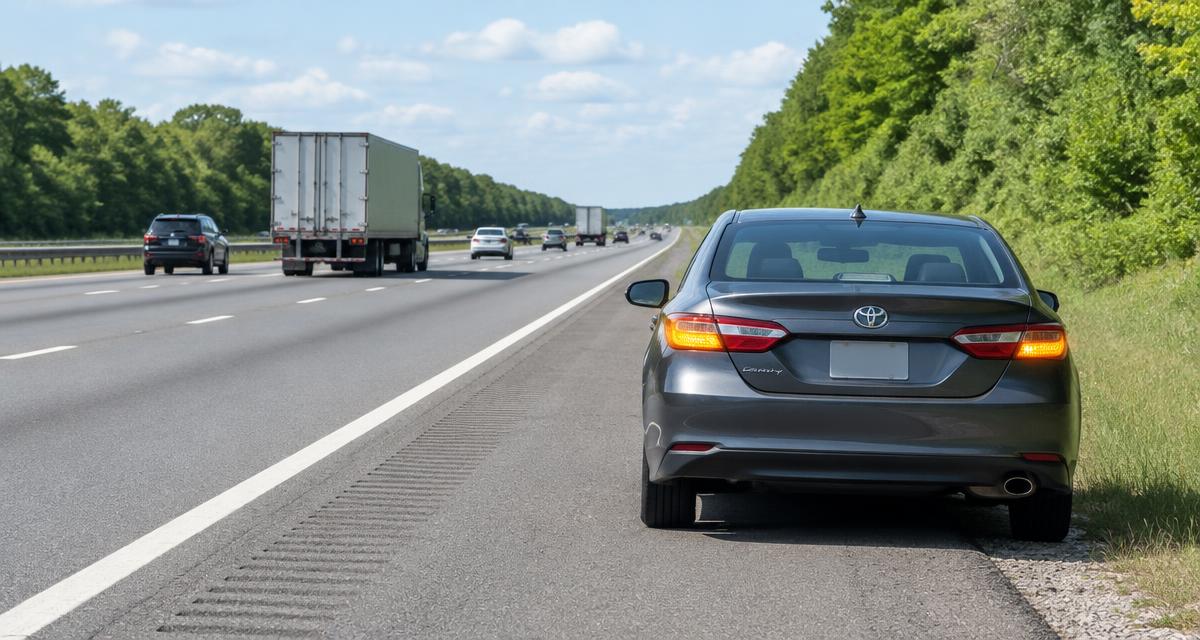
If you can't make an exit, use the right shoulder, not the median. Pull as far off the travel lane as the shoulder allows, turn your wheels away from the road and set the parking brake. Avoid stopping just past a curve or the crest of a hill, where drivers can't see you in time.
2. Decide: stay in the car or get out?
On a busy interstate, the biggest danger is another vehicle hitting yours. As a rule:
- If there is a guardrail and room behind it, get out on the side away from traffic and wait behind the rail, uphill and behind your car.
- If there is no safe place to stand, stay buckled in with your hazards on.
- Never stand between your car and traffic, and never try to push the car or work on it in the lane.
At night, keep your interior light off and your hazards on. If you have reflective triangles, place them only if you can do it without walking along the travel lane.
3. Call for help and know where you are
Call 911 if anyone is hurt or your car is blocking a lane. North Carolina drivers can also dial *HP (*47) from a cell phone to reach the State Highway Patrol.
For a tow or roadside help, call us at (888) 383-0095. The fastest calls are the ones where we know exactly where you are, so look for:
- The mile marker (small green signs on the shoulder)
- The last exit you passed and the direction you were heading (eastbound toward Burlington, westbound toward Winston-Salem)
- Your phone's map pin, which you can text to us
4. Tell us what the car is doing
A few details help us bring the right equipment and decide whether it can be fixed on the spot:
- Does it start at all, or crank without starting?
- Any smoke, burning smell or fluid under the car?
- Is it a flat tire, and do you have a usable spare?
- Can it roll, steer and shift into neutral?
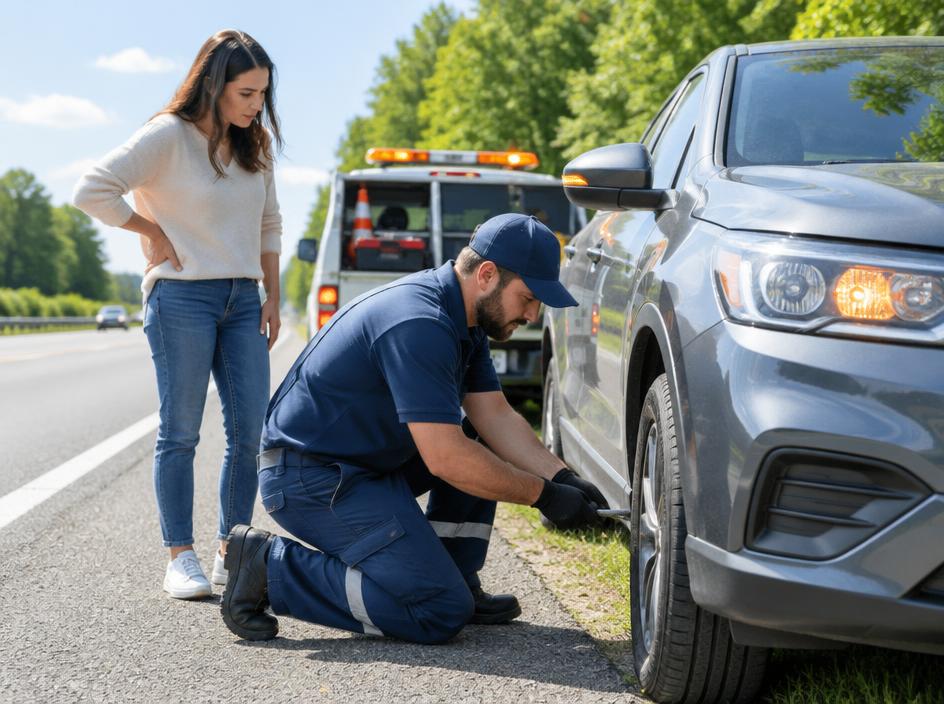
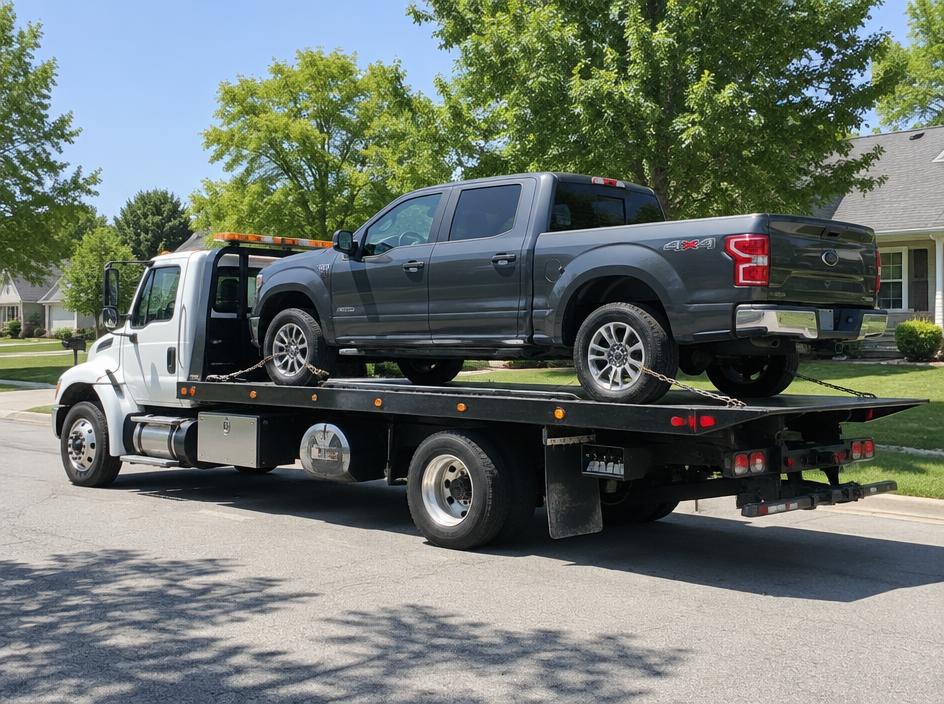
If it's a simple fix, our roadside assistance page explains what can usually be handled right there. If not, we'll tow it to your shop, your home or another safe spot.
5. The Move Over law works both ways
North Carolina's Move Over law requires drivers to move over a lane, or slow down if they can't, for stopped emergency vehicles and for tow and service trucks working with their lights on. When we arrive, give us room to work and stay where we ask you to. When you're the one passing a stopped vehicle, do the same for the next driver.
6. Watch out for "helpers" you didn't call
Sometimes a tow truck shows up before anyone was called. Before you hand over your keys, ask who sent them and confirm the company name. If you called JCH Towing, we'll tell you what to expect when we confirm your call.
Keep this in your glove box
- Phone charger
- Small flashlight
- Reflective triangles or a vest
- Water and a snack
- Your insurance card and registration
- Our number: (888) 383-0095
A breakdown is never convenient, but it doesn't have to be dangerous. Get right, stay clear of traffic, know your mile marker and make one call.